2026, 47(7): 825-844.
doi: 10.21656/1000-0887.460219
Abstract:
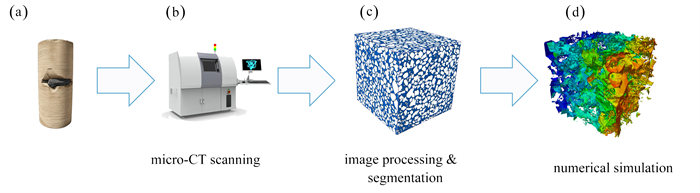
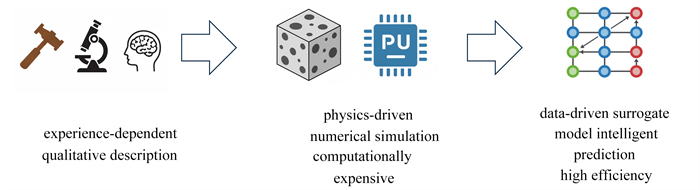
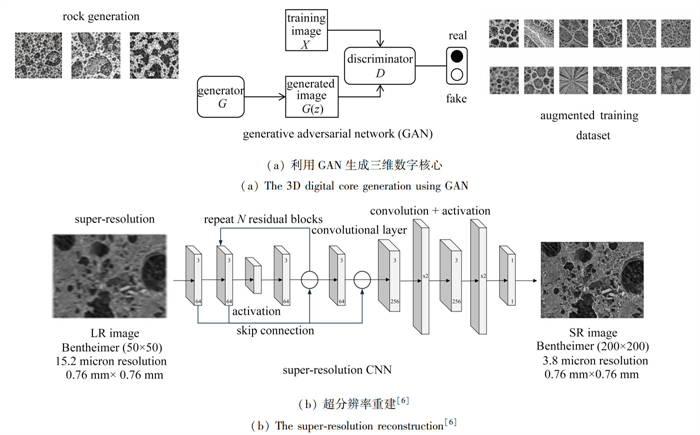
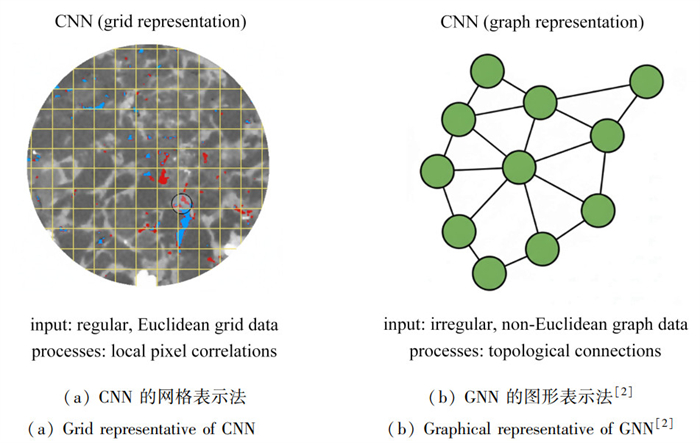
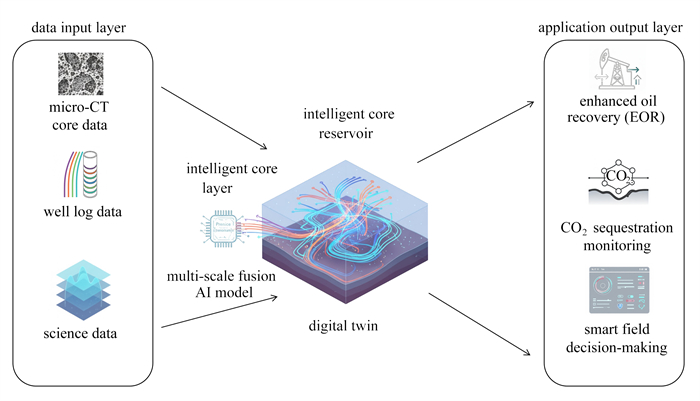
Core analysis is the cornerstone of reservoir evaluation. The digital rock physics (DRP) enables the quantitative characterization of reservoir microstructures and flow properties through 3D imaging and numerical simulation. The evolution of DRP paradigms was reviewed from the 1st-generation "What you see is what you get" (geometric characterization) and the 2nd-generation "What you calculate is what you get" (numerical simulation), to the emerging 3rd-generation "What you learn is what you get" (intelligent prediction). The 1st 2 paradigms face 2 core bottlenecks: the difficulty in determining the representative elementary volume (REV) and the prohibitive computational costs of numerical simulations. The progress of the 3rd-generation intelligent prediction paradigm was systematically summarized, with the focus on structural properties, single-phase permeability, and multiphase flow properties (relative permeability, capillary pressure, and wettability). Centered on deep learning, this paradigm offers revolutionary pathways to overcome traditional limitations: on one hand, the generative adversarial networks (GANs) and the super-resolution (SR) techniques were employed for data-driven reconstruction to mitigate REV challenges; on the other hand, the efficient surrogate models, such as the convolutional neural networks (CNNs), were constructed to accelerate property prediction by orders of magnitude. Finally, the current challenges regarding data dependence, model generalization, and physical interpretability were discussed to outlines future directions, including integrating physical mechanisms into AI models (physics-informed AI), promoting multi-scale data fusion, and constructing reservoir "digital twins" to support the development of smart oilfields.