


Optimization Design of Aerodynamic Performances of Aircraft Engine Fan Blade Profiles Based on Data Driven Methods
-
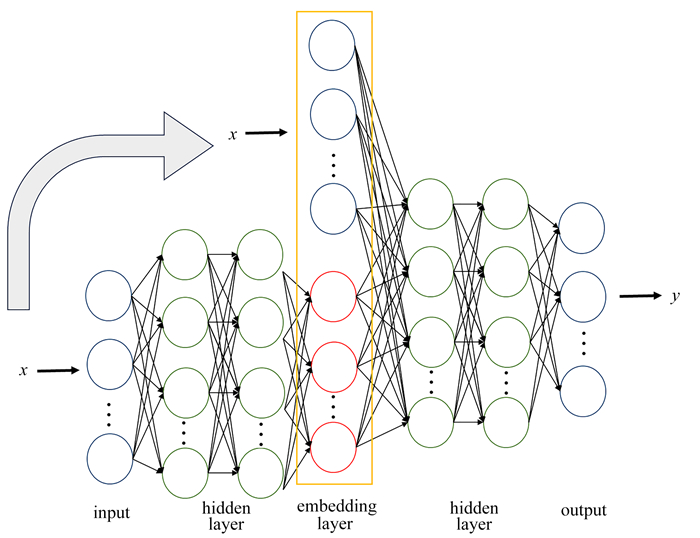
摘要: 提出了一种流动特征嵌入(embedding flow-feature network, EFFN)代理模型,通过将流场信息融入代理模型中,提高了代理模型的预测精度,同时令代理模型具有流动特征预测能力. EFFN模型对训练数据样本总量的需求与传统用于气动优化的代理模型一致甚至更少. 它在样本数量相同的情况下比传统代理模型拥有更高的预测精度,并且它能够准确预测流动特征,同时一定程度上解决了代理模型物理可解释性差的问题. 由于EFFN模型相较传统代理模型提供了更可靠的预测值,在气动优化设计中拥有更好的优化结果. 对二维叶型总体气动性能优化的结果表明,基于DBN模型的优化叶型总压损失系数相对减少17.3%,而EFFN模型的优化叶型总压损失系数相对减少18.0%,基于EFFN模型优化叶型的损失性能得到更好地改善.Abstract: A flow feature embedding proxy model (embedding flow feature network, EFFN) was proposed, to improve the prediction accuracy of the proxy model by integrating the flow field information into the proxy model, and enable the proxy model to predict flow features. The requirement for the total number of training data samples in the EFFN is consistent or even less than that of traditional surrogate models used for aerodynamic optimization. It has higher prediction accuracy than traditional surrogate models with the same sample size, and can accurately predict flow characteristics, while to some extent solving the problem of poor physical interpretability of surrogate models. Meanwhile, due to the more reliable values predicted by the EFFN, it has better optimization results in aerodynamic optimization design. The results of optimizing the aerodynamic performances of the 2D blade profiles show that, the total pressure loss coefficient of the optimized blade profile based on the DBN model relatively decreases by 17.3%, while the total pressure loss coefficient of the optimized blade profile based on the EFFN model relatively decreases by 18.0%. The loss performance of the optimized blade profile based on the EFFN model was highly improved.
-
Key words:
- data driven /
- optimize design /
- neural network /
- blade cascade /
- flow features
edited-byedited-by1) (我刊青年编委陶俊来稿) -

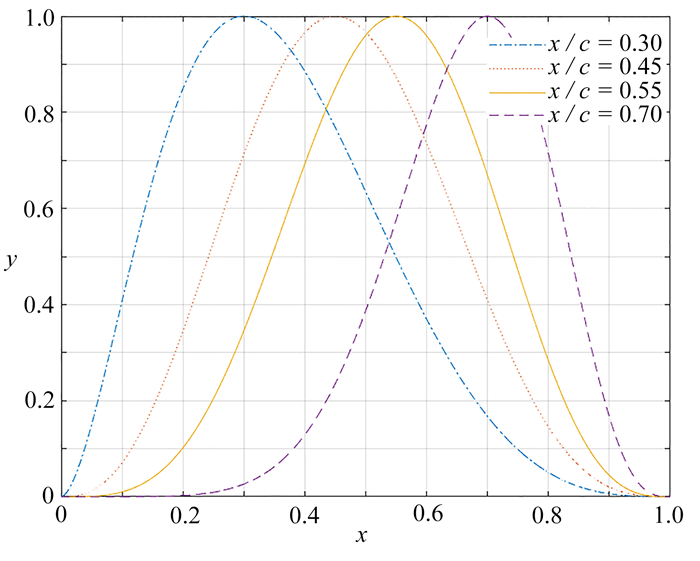
图 1 Hicks-Henne型函数图
注 为了解释图中的颜色,读者可以参考本文的电子网页版本,后同.
Figure 1. The Hicks-Henne type function diagram

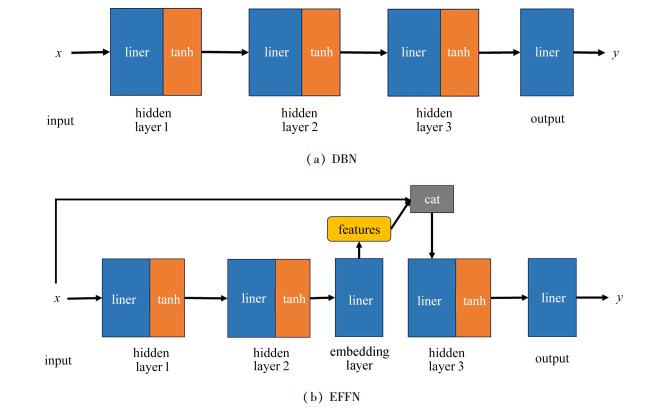
图 4 DBN模型结构示意图
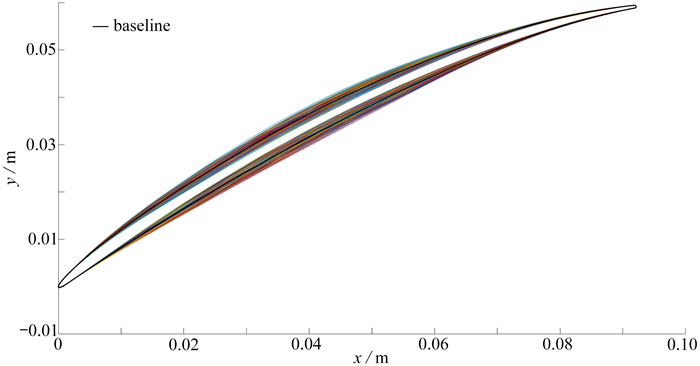
Figure 4. The schematic architecture of the deep belief network (DBN) model

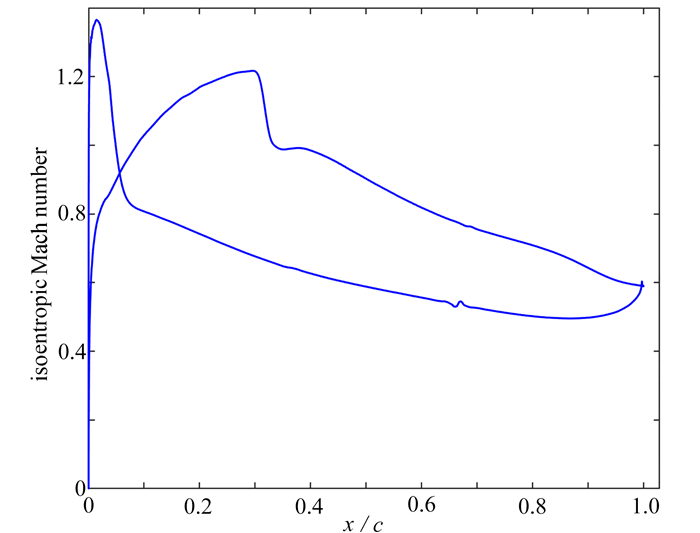
图 7 叶型表面等熵Mach数分布
Figure 7. The isoentropic Mach number distribution on the blade surface

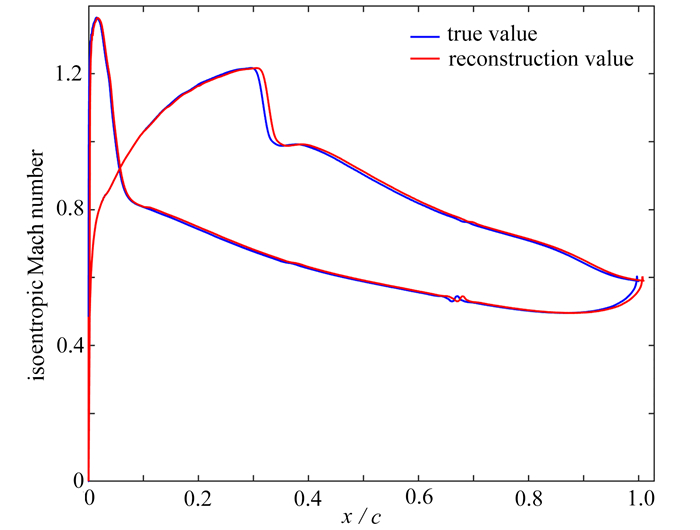
图 8 AE模型叶型表面等熵Mach数分布重构
Figure 8. Reconstruction of the isoentropic Mach number distribution on the blade surface by the AE model

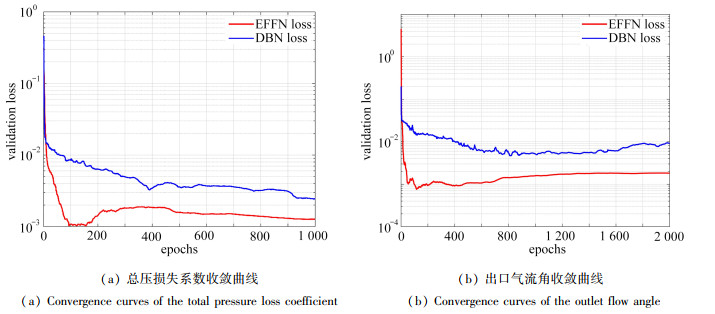
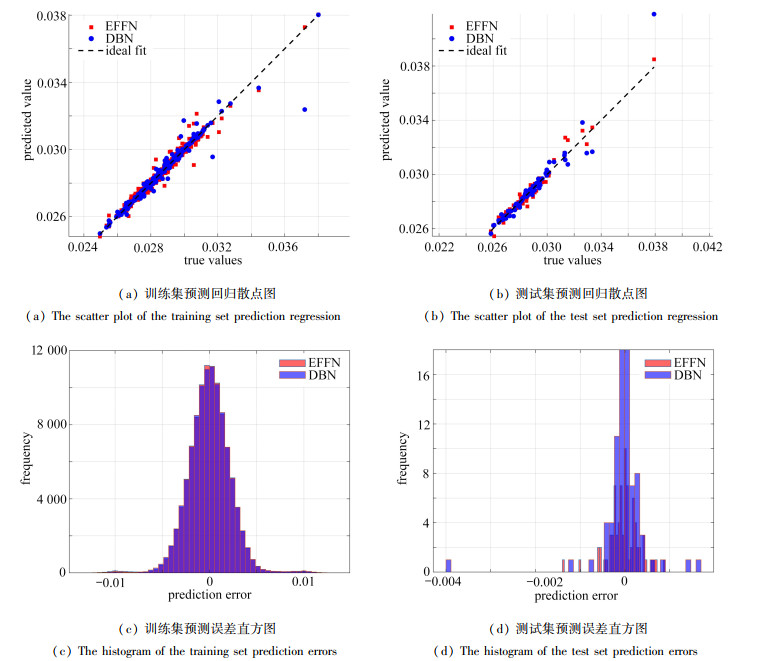
图 11 二维叶型总压损失系数预测
Figure 11. Predictions of total pressure loss coefficients for 2D blade profiles

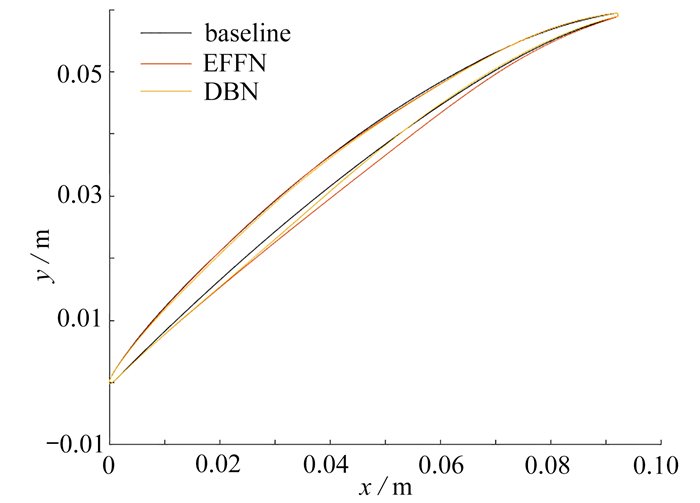
图 15 原始与优化叶型几何拓扑结构
Figure 15. Comparison of geometric topologies between original and optimized blade profiles

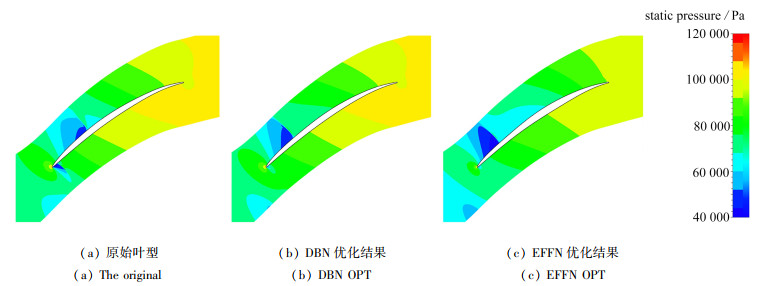
图 16 原始与优化叶型的静压分布云图对比
Figure 16. Comparision of the static pressure contours between the original and optimized blade profiles

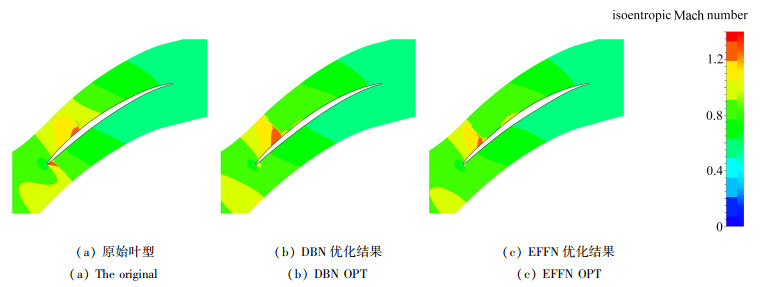
图 17 原始与优化叶型的等熵Mach数分布云图对比
Figure 17. Comparision of the isoentropic Mach number contours between the original and optimized blade profiles
表 1 Latin超立方抽样参数设置
Table 1. Latin hypercube sampling parameter settings
parameter setting number of samples 400 number of dimensions 8 stratification equal-width sampling method random variable bound [-0.006, 0.006]  下载: 导出CSV
表 2 不同网格数下45%相对叶高叶型性能参数
Table 2. Computed performances of 45% span cascades with different meshes
number of grid nodes total pressure loss coefficient outlet flow angle/(°) 127 098 0.029 5 22.4 173 666 0.029 2 22.5 240 298 0.028 9 22.5 303 458 0.028 8 22.5
下载: 导出CSV
表 3 数值模拟设计参数
Table 3. Numerical simulation design parameters
parameter value freestream velocity 0.8Ma fluid density/(kg/m3) 1.047 reference length/m 0.1 inlet total temperature/K 293 inlet total pressure/Pa 122 800 inlet flow angle/(°) 45.56 turbulent viscosity coefficient/(m2/s) 0.000 1 outlet static pressure/Pa 101 325 blade pitch/m 0.061 1
下载: 导出CSV
表 4 AE降维模型参数设置
Table 4. AE dimensionality reduction model parameter settings
parameter value number of encoder hidden layers 3 encoder hidden layer size 64 number of decoder hidden layers 3 decoder hidden layer size 64 learning rate 0.002 number of max epochs 2 000 number of batches 64
下载: 导出CSV
表 5 遗传算法参数设置
Table 5. Parameter settings of the genetic algorithm
parameter value population size 100 crossover probability 0.5 mutation probability 0.1 number of maximum generations 200
下载: 导出CSV
表 6 基准叶型与最优叶型对比
Table 6. Comparison of baseline and optimal blade profiles
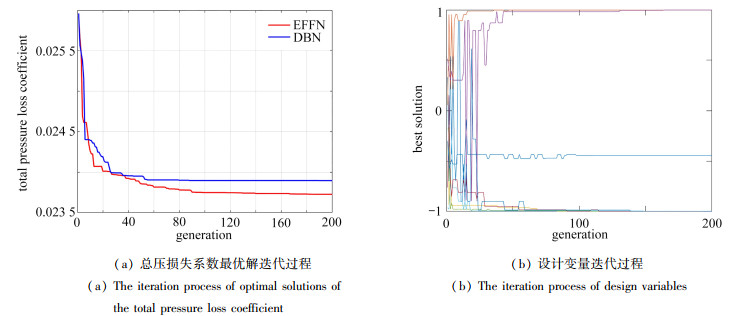
total pressure loss coefficient relative error/% outlet flow angle/(°) relative error/% baseline 0.028 9 - 22.5 - EFFN OPT 0.023 7 -18.0 22.8 1.3 DBN OPT 0.023 9 -17.3 22.9 1.8
下载: 导出CSV
表 7 优化叶型气动参数对比
Table 7. Comparison of aerodynamic parameters for optimized blade profiles
total pressure loss coefficient relative error/% outlet flow angle/(°) relative error/% CFD 0.024 0 - 22.7 - EFFN 0.023 7 1.3 22.8 0.4
下载: 导出CSV
-
[1] 王强, 郑日恒, 陈懋章. 航空发动机科学技术的发展与创新[J]. 科技导报, 2021, 39(3): 59-70.WANG Qiang, ZHENG Riheng, CHEN Maozhang. Development and innovation of aeroengine science and technology[J]. Science & Technology Review, 2021, 39(3): 59-70. (in Chinese) [2] 周正贵. 压气机/风扇叶片自动优化设计的研究现状和关键技术[J]. 航空学报, 2008, 29(2): 257-266.ZHOU Zhenggui. Current situations and key techniques of automatic aerodynamic design of compressor/fan blades[J]. Acta Aeronautica et Astronautica Sinica, 2008, 29(2): 257-266. (in Chinese) [3] CUMPSTY N A. Compressor Aerodynamics[M]. 2nd ed. Cambridge: Cambridge University Press, 2004. [4] DENTON J D. Loss mechanisms in turbomachines[R]. New York: American Society of Mechanical Engineers, 1993. [5] 陈懋章, 刘宝杰. 大涵道比涡扇发动机风扇/压气机气动设计技术分析[J]. 航空学报, 2008, 29(3): 513-526.CHEN Maozhang, LIU Baojie. Fan/compressor aero design technology for high bypass ratio turbofan[J]. Acta Aeronautica et Astronautica Sinica, 2008, 29(3): 513-526. (in Chinese) [6] 王聪. 多流程数据驱动正/反设计方法研究及其在航空发动机部件气动设计中的应用[D]. 上海: 复旦大学, 2023.WANG Cong. Research on multi-process data-driven direct/inverse design method and its application in aero-engine component aerodynamic design[D]. Shanghai: Fudan University, 2023. (in Chinese) [7] HOLMES P, LUMLEY J L, BERKOOZ G. Turbulence, Coherent Structures, Dynamical Systems, and Symmetry[M]. Cambridge: Cambridge University Press, 1996. [8] WILLCOX K, PERAIRE J. Balanced model reduction via the proper orthogonal decomposition[J]. AIAA Journal, 2002, 40(11): 2323-2330. doi: 10.2514/2.1570 [9] TOAL D J J, BRESSLOFF N W, KEANE A J, et al. Geometric filtration using proper orthogonal decomposition for aerodynamic design optimization[J]. AIAA Journal, 2010, 48(5): 916-928. doi: 10.2514/1.41420 [10] SKINNER S N, ZARE-BEHTASH H. State-of-the-art in aerodynamic shape optimisation methods[J]. Applied Soft Computing, 2018, 62: 933-962. doi: 10.1016/j.asoc.2017.09.030 [11] 刘伟, 徐一冰, 王秋钧, 等. 压气机三维叶片代理辅助优化中无效样本点处理方法研究[C]//第六届空天动力联合会议暨中国航天第三专业信息网第四十二届技术交流会暨2021航空发动机技术发展高层论坛论文集. 成都, 2022: 130-138.LIU Wei, XU Yibing, WANG Qiujun, et al. Research on invalid sample points processing method in surrogate-assisted optimization of 3D compressor blades[C]//China Association for Science and Technology Aero Engine Industry-University Consortium. Proceedings of the 6th Joint Conference on Aerospace Power and the 42nd Technical Exchange Conference of the Third Professional Information Network of China Aerospace. Chengdu, 2022: 130-138. (in Chinese) [12] 郝书荣. 压气机叶片气动力建模智能化方法研究[D]. 北京: 北京工业大学, 2021.HAO Shurong. Study on the intelligent modeling of the blade aerodynamic force in compressor[D]. Beijing: Beijing University of Technology, 2021. (in Chinese) [13] YONDO R, ANDRÉS E, VALERO E. A review on design of experiments and surrogate models in aircraft real-time and many-query aerodynamic analyses[J]. Progress in Aerospace Sciences, 2018, 96: 23-61. [14] BARNHART S A, NARAYANAN B, GUNASEKARAN S. Blown wing aerodynamic coefficient predictions using traditional machine learning and data science approaches[C]//AIAA Scitech 2021 Forum. 2021. [15] GOODFELLOW I, BENGIO Y, COURVILLE A. Deep Learning[M]. Cambridge: MIT Press, 2016. [16] SUN G, WANG S. A review of the artificial neural network surrogate modeling in aerodynamic design[J]. Proceedings of the Institution of Mechanical Engineers (Part G): Journal of Aerospace Engineering, 2019, 233: 5863-5872. doi: 10.1177/0954410019864485 [17] SECCO N R, DE MATTOS B S. Artificial neural networks to predict aerodynamic coefficients of transport airplanes[J]. Aircraft Engineering and Aerospace Technology, 2017, 89(2): 211-230. doi: 10.1108/AEAT-05-2014-0069 [18] DU X, HE P, MARTINS J R. A B-spline-based generative adversarial network model for fast interactive airfoil aerodynamic optimization[C]//AIAA Scitech 2020 Forum. Orlando, 2020. [19] DU X, HE P, MARTINS J R R A. Rapid airfoil design optimization via neural networks-based parameterization and surrogate modeling[J]. Aerospace Science and Technology, 2021, 113: 106701. doi: 10.1016/j.ast.2021.106701 [20] WANG X D, HIRSCH C, KANG S, et al. Multi-objective optimization of turbomachinery using improved NSGA-Ⅱ and approximation model[J]. Computer Methods in Applied Mechanics and Engineering, 2011, 200(9/10/11/12): 883-895. [21] LI J C, DU X S, MARTINS J R R A. Machine learning in aerodynamic shape optimization[J]. Progress in Aerospace Sciences, 2022, 134: 100849. [22] 孙刚, 王聪, 王立悦, 等. 人工智能在气动设计中的应用与展望[J]. 民用飞机设计与研究, 2021(3): 1-9.SUN Gang, WANG Cong, WANG Liyue, et al. Application and prospect of artificial intelligence in aerodynamic design[J]. Civil Aircraft Design & Research, 2021(3): 1-9. (in Chinese) [23] HICKS R M, HENNE P A. Wing design by numerical optimization[J]. Journal of Aircraft, 1978, 15(7): 407-412. doi: 10.2514/3.58379 [24] ZHOU S, ZHOU H, YANG K, et al. Research on blade design method of multi-blade centrifugal fan for building efficient ventilation based on Hicks-Henne function[J]. Sustainable Energy Technologies and Assessments, 2021, 43: 100971. doi: 10.1016/j.seta.2020.100971 [25] 李正, 余华蔚, 尹红顺, 等. 椭圆前缘锐化度对亚声速压气机叶片性能的影响[J]. 燃气涡轮试验与研究, 2018, 31(3): 14-17.LI Zheng, YU Huawei, YIN Hongshun, et al. The influence of ellipse leading edge sharpness on the performance of subsonic compressor blade[J]. Gas Turbine Experiment and Research, 2018, 31(3): 14-17. (in Chinese) [26] 吕剑波. 前缘几何对高负荷压气机叶型气动性能影响研究[D]. 北京: 中国科学院大学, 2015.LV Jianbo. The influence of leading-edge geometry on aerodynamics of high lift compressor cascades[D]. Beijing: University of Chinese Academy of Sciences, 2015. (in Chinese) [27] 胡南平, 周正贵. 平面叶栅流场非定常特性分析[J]. 科学技术与工程, 2022, 22(26): 11705-11714.HU Nanping, ZHOU Zhenggui. Analysis of unsteady characteristics of planar cascade flow field[J]. Science Technology and Engineering, 2022, 22(26): 11705-11714. (in Chinese) [28] 刘红波, 陆刚, 边宽江. 几种实验设计方法的比较[J]. 安徽农业科学, 2007, 35(36): 11738-11739.LIU Hongbo, LU Gang, BIAN Kuanjiang. Comparison among several methods of experimental design[J]. Journal of Anhui Agricultural Sciences, 2007, 35(36): 11738-11739. (in Chinese) [29] GIUNTA A A, WOJTKIEWICZ JR S F, ELDRED M S. Overview of modern design of experiments methods for computational simulations[C]//In 41st Aerospace Sciences Meeting and Exhibit. Reno, Nevada, 2003. [30] HINTON G E, OSINDERO S, TEH Y W. A fast learning algorithm for deep belief nets[J]. Neural Computation, 2006, 18(7): 1527-1554. [31] HINTON G E, SALAKHUTDINOV R R. Reducing the dimensionality of data with neural networks[J]. Science, 2006, 313(5786): 504-507. -

计量
- 文章访问数: 51
- HTML全文浏览量: 13
- PDF下载量: 15
- 被引次数: 0

 渝公网安备50010802005915号